tirsdag 20. april 2010

ROOFTOP JUNK


a mapping of the GSM(red),NMTM(yellow) mobile phone towers in the area. These towers are a part of the new infrastructure called SSC-sensor, software, connectivity, and shows how this structure build a new layer on top of the "traditional" infrastructure, WGE-water, gas, electricity, in the city. SSC is designed to excist in the background, blend in with other rooftop junk and its signal is only readable through another device, i.e the mobilephone. This means that its signals are meaningless without a way to ACCESS them, in this case the phone becomes the KEY or the CODE to understand the rooftop installations.

criminal city


Mapping the criminal use of the city by examining the police reports. Some of the information, like stick-ups are site specific (down to the exact spot) while other data (like violence) are more general, only showing the zones where the violence is most agressive. I will further into this and try to make it even more specific. WHY is this relevant? Maps like this makes transparent something that absolutely shapes both the affective experience of being in the city and the choices we make there-the actuality of street crime-and by plotting these reported incidents an a map we visualize the exact knowledge. What if this information was ambient- that the information came to you while you where in that place? Sensing this through walking in the street, would one feel different when one had the exact INFORMATION, NOT just ASSUMPTIONS on the conditions on the crime/ dangers on the street?

YITV


YITV (young immigrant TV) is a project related to Riverside, the youth club located at Grønland.
Theyre aim is to give the kids a voice and to stop prejudice towards Grønland.

income


The average salary in Norway was according to SSB 410.400 NOK (2008)
The average income in Urtegata, one of the streets at Grønland was 86.000 NOK, the lowest average income in all of Norway. People rely on social assistance, in 2004 one out of every fifth NOK on the governments social budget was used in Oslo. In the inner city, 8.5% are considered poor. There are also great differences within the city and also a great variation within each boroughThere are significant differences in median income for households between districts in Oslo. For all types of household income is generally higher in the western parts than in the eastern parts. The differences are especially for people living alone and the highest for couples with children 0-17 years and households with older children. For example, the average couple with children 0-17 years, is almost twice as high in the borough Vinderen (691.700 NOK) compared to Gamle Oslo (350.800 NOK). So, what does this really tells us; differnces are everywhere, on every scale, within every building...

Grønland Bruktmarked


Every saturday, all year around, people gather to visit the fleamarket under the bridge at Grønland. Its a sweet mix of used electronics, furniture, clothes, stolen goods etc, just like any market anywhere...On the best days, over 10 000 people gather here to check out this vast collection of items. Last year the police had a razzia and had to throw 11 out a total of 50 vendors in jail due to sale of stolen goods, police got back two months later and this time 14 of the vendors got put away. This is probably a discussion around how to sell stolen goods, what is stolen goods and do people really care weather the goods they buy are stolen or not, probably not.
Each year each and everyone of us throw away app.1000 kg of waste, markeds like this redistribute some of this waste and prolongs the lifecycle span, one then may argue that its environmental friendly. Anyhow, it keeps the area vibrant and is an important fixture in keeping the city alive...

mandag 19. april 2010

INFORMATION WANTS TO BE FREE….


Once again I was thinking about McLuhan; ”Information wants to be free”.
I started to look into the average spending on information, the infrastructure of the minds. It was hard to find something about this on norwegian issues, but found some articles about it in New York Times, which, even though its american figures, can still provide us with some background material. It used to be that a basic $300-a-year phone bill was your main telecommunications expense and some postal stamps where the cost for your written communication. But by 2004, the average American spent $770.95 annually on services like cable television, Internet connectivity and video games, according to data from the Census Bureau. By 2008, that number rose to $903, outstripping inflation. By the end of this year, it is expected to have grown to $997.07. Add another $1,000 or more for cellphone service and the average family is spending as much on entertainment over devices as they are on dining out or buying gasoline. And these figures do not take into account movies, music and television shows bought through iTunes, or the data plans that are increasingly mandatory for more sophisticated smartphones. This means that there will be a gap between the ones who are willing and able to pay for this access and those who want.
Even though we think we have now reached the information society, its not like that for everyone, the costs to keep the information free are for some quite an obstacle.
What we realy pay for now is not free information, we pay for CONTENT, and the abbility to get ACCESS to this content. If we look at the data available to us we will see that we pay alot to gett he ACCESS, but, we pay a very small sum for the available CONTENT.
The reason we pay less for content is simple: There is more content available than there is time to consume it.

lørdag 17. april 2010

screening circle


screening circle
The graphics are a collaborative product and should be considered part of the creative commons.As one draw in this circle one may notice icons changing, because other people are drawing at the same time.

fredag 16. april 2010

SCENERY


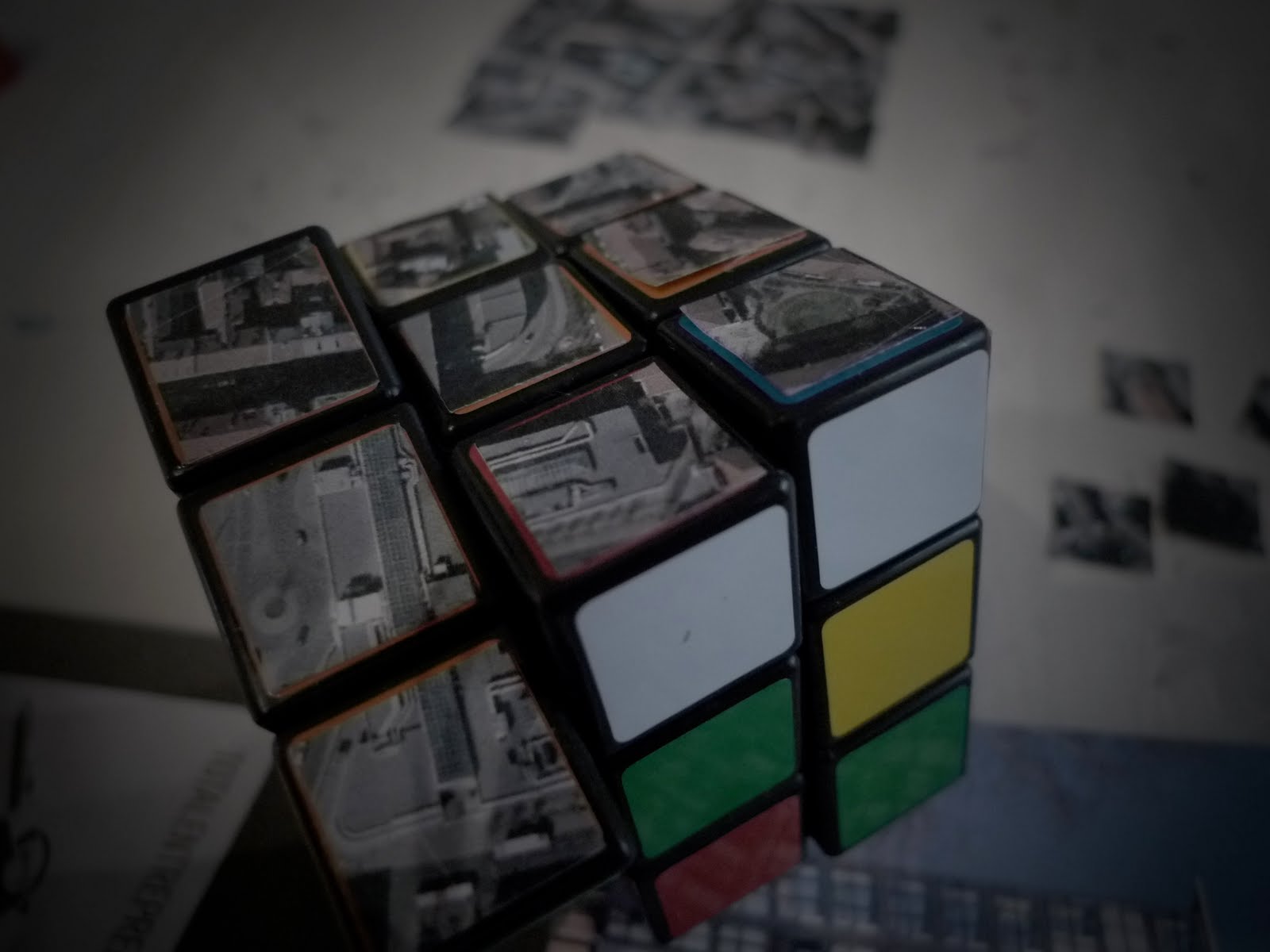
What is a map, what is a photo, through deconstruction of a city scape one makes new ones, combining knowledge with reflection, with emotions, with facts, with recollection etc... made this little rubiks cube last night, the ortophoto is in 1:5000 scale of Grønland, all laid out in the right way, started to twist, to turn, gets to complicated, Ill never get it right, been working all night.

the consequences of volcanos


Drove the whole night from Bergen towards Oslo, a lot of construction work on the streets so we sometimes had to stop and wait, all planes where on ground due to the fantastic volcano. Had a smoke, started to talk to the guys behind us, they where going from Radøy to Ukraina to do some "bizziness", 3500 kilometers, when no airplane, buy a car and drive, love the way the volcano has an impact on someones lives...

torsdag 15. april 2010

SHOP TILL U DROP...


The importance of the retail sector.
In 2008 the total trade turnover for the retail sector in Oslo was 41.5 billion NOK.
42% of its total trade was going through the city's 47 shopping centers.
The area of Gamle Oslo, Grønland, had a total trade turnover wich was 1664 million NOK. Grønland seperates itself from the rest of the city with the fact that here, most shops and grocery stores are not chain retail, its mostly small scale, family owned businesses and although they dont contribute to the city´s economy in the same way as the shopping malls or chain stores they most certainly add flavour and distinction to the street life and how people live theire lifes. Fresh goods are displayed on the streets outside the shops, creating an everchanging scenery wich reflects the seasons, the marketprices and other ephemeral factors.
The display of the goods also reflects the national heritage, taste and preferances.
The only shopping mall in the area is the Olav Thon owned “Grønland Bazar” a ridiculously looking building which in a horrible way mimics the western idea of how a middle east bazaar looks like. The center wich holds 18 shops had a toatl turnover of 125 million NOK, 8% of the neighbourhoods total retail turnover. Vinmonopolet is situated inside the center and its viable to think they stands for a great percentage of the total turnover, the question to ask is then, WHY is the state controlled Vinmonopolet supporting the gentrification of the area, WHY did they choose to establish inside of this center and NOT on the street? What kind of mechanisms comes into play when the government work side by side with the biggest property developer in Oslo, this smells GENTRIFICATION subsideded by the GOVERNMENT.

VOLCANOS


Its the totality of chaos, a volcano eruption on Iceland have paralyzed ALL airtraffic throughout northern europe. Its dark clouds travel with immense speed towards Norway. Volcanoes are a much-feared peril in civil aviation, disgorging fine ash that can damage jet engines, choke the hi-tech probes used in modern avionics and scour a plane's windscreen to the point of invisibility
Its uncertain when the planes once again can be back in the air, its the butterflyeffect, the mother of CHAOSTHEORY!

SOCIAL DIFFERENCES


In the district of Gamle Oslo wich Grønland is a part of 1 out of 9 is a recipient of social assistance, the numbers for the more prospering areas of the city (Vestre Aker) is 1 to 50. 22% of the kids under the age of 18 lives in a household that receives social assistance. The overall number for the city is 5,4%.
Why do we have this figures? What kind of information can we withdraw from them?
In the municipality Oslo there is a total of 10.000 social housing appartments, 48% of these are situated within the inner east city core and this accelerates the fact that the city is a divided universe. The problem is NOT that there are social housing, the problem is WHO gets social housing and what kind of environments the social housing provides for the ones who lives there with theire families, raing theire kids.
Two political decisions from the Oslo City Council have worked together and reinforced each other. In 2004, it introduced market rent and ended all subsidies of rent. Instead, the ones who needed it could get direct housing subsidies. At the same time, new rules where inforced to who is allowed to rent appartment in municipal housing. The new rules do not any longer require that the clients should have so-called "boevne"- to have ability to take care of them self. Released prisoners, former institutionalized people and refugees are mentioned explicitly.

WALLRAFF UNDERCOVER RESEARCH


Gunter Wallraff came to prominence thanks to his striking journalistic research methods and several major books on lower class working conditions and tabloid journalism. This style of research is based on what the reporter experiences personally after covertly becoming part of the subgroup under investigation. Wallraff would construct a fictional identity so that he was not recognisable as a journalist. In this way, he created books which denounce what he considers to be social injustices and which try to provide readers with new insights into the way in which society works.
ACT AS WALLRAFF
in a situation like Grønland its the multiplicity of the people that makes up the society. The people are the layers of the city and each and one of them has a different view on whats the problem, the solution, the joy and the glue that makes this multiplicity work. Mr. Sluik suggesteted to do like Wallraff, construct new identities, act them out and with this try to see the area from different angels, find out what distances and links this different personas in the cityscape.
So, what are the different identities I should be, how can I put myself in their situation, how to become another person for a day…

onsdag 14. april 2010

free software

Free software is not only about the liberty to download it, use it and misuse it in any way you like, but is also about, the softwares freedom to grow, to multiply and to improve, regardless of where it resources itself from. Its the idea that its developed through a voluntarilly production; "from each according to their ability, to each according to their need".

simple forms


Simple forms do not necessarily lead to a clearer, simplified life.

on information


The aphorism "information wants to be free" has become a battle cry of resistance against information controls. A variety of interpretations provide useful insights into what constitutes this "freedom" in the information age. For designers of responsive systems regulating control and freedom in their designs remains a critical problem. How open should a system be? What role should public participation play in its instantion? How does the design engage public space? Who operationally maintains it? Who or what controls it objectives?
How to "free information" without making it just another cliche, how to define whats open and what to stay hidden. Its impossible to free all information, cause it would make our societies collaps, theres allways going to be someone whos just waiting for the right moment to misuse it. Whos to decide this?
In the cities of today it excists a microcosm wich reflects the major challenges and opportunities facing the planet today, only more intensified.
In the city, all man-made systems intersect, interact and interconnect with one another- forming a complex system of systems.

tirsdag 13. april 2010

playground/interplay


Ive been struggling with the word PLAYGROUND ever since it was given to me a couple of days ago, the definition of the word is a place with a specific design for children be able to play there. It may be indoors but is typically outdoors (where it may be called a tot lot in some regions). I know the word is a noun, meaning recreation area, and that its synonym is jungle gym...
I understand why this word was given to me but I think its an inapropriate word to use in this manner; I hereby choose to redefine it; what they really wanted to say and the word they wanted to use was; INTERPLAY, but the problem is that this word means INTERACTION, one of the other words that was also given to me, this makes the cycle complete, Ive been given two synonyms to work with... The word interplay is also a noun but the use is more accurate than playground, its synonyms are: coaction, exchange, give-and-take, mesh, meshing, networking, reciprocation, reciprocity, team play, teamwork, tit for tat, transaction...

completition


Architects tend to design a "finished" building that once its completed starts to impair itself. Landscape Architects creates a premise or a process- they design a system, something that starts when they leave it, ie. starts to develop itself on its own terms and thus frees itself from the intended. This can be achived in architecture as well if one emphasized the quality of underspecification. The notion of an architecture as a system with underspecified goals suggests an architecture that evolves and therfore is never complete, like nature itself. This will break down the distinction between a building and its environment; it presupposes that a building creates an environment and carries on creating an environment as it attempts to specify itself.
The architecture then cant help but be ecological in the sense that the input sources and output sources become part of the same architectural system, it reflects the innovation, replenishment and reconstruction. Like landscape architects design with ephemeral materials like plants, wood, water, iron etc, the architect may emphasize the ephemerality of architectural constructions and help counteract the usual architectural obsession with permanence...

WHY QUOTE?


Quotations are useful in periods of ignorance or obscurantist beliefs.
Guy Debord, Panegyric,1989

FLOSS


Free, Libre, Open Source Software, FLOSS, is software that is liberally licensed to grant the right of users to use, study, change, and improve its design through the availability of its source code. The Free Software Definition states that the free software contains the following freedoms:
-The freedom to run the program, for any purpose (freedom 0)
-The freedom to study how the program works, and adapt it to your needs (freedom 1). Access to the source code is a precondition for this.
-The freedom to redistribute copies so you can help your neighbor (freedom 2)
-The freedom to improve the program, and release your improvements to the public, so that the whole community benefits (freedom 3). Access to the source code is a precondition for this.

Why is this relevant to my diploma? If we look at the rules of FLOSS and transfer them to abstract architectural principles, we see that a number of attempts have been made since the 70s to transfer such principles to the making of objects. In architecture the drawings and ether data is to be considered the "source" and therefore its important to open up the idea of the design process. The design will then reflect on the idea that; we want to see what happens if we work otherwise. The design will arise from the participation and configuration of those create and implement it. The aesthetics will be organization and not of form. An arisng problem with this thinking is the fact that it enables anyone to be a co-designer, but this does not mean that everyone will undertake to participate in this process. But, the system encourages people themselves to create their own spaces and collaboratively build a social space. It becomes an architecture that is produced through an open process that is never finished, there is no difference between the process, the design and the inhabitation.

mandag 12. april 2010

CCTV


Whats left of privacy is what you do in your own house, all your physical movements outside your private sphere is being collected and stored for 6 months...

Theres more than 1000 CCTV installations on the streets in the downtown Oslo area, in the area surrounding the train station its 397 cameras alone.
Whats the need for this? Crimerates are still the same, a camera cant change human behaviour in public places, Is it a senseless deprivatory of personal freedom or does it really have an effect on our behaviour?

Picture from the article in the Lov & Data: The figure shows the density of surveillance cameras in public areas in Oslo: one to five cameras is marked yellow, with six to ten cameras, orange, and with more than ten cameras red. Unmarked areas are either free of cameras or were not investigated. Air Image copyright Digital Globe and Google 2009; colored overlay copyright Hans E Pless / UMB 2009
Nrk
TheBigBrotherState

Khat


Over 1000 somalians are considered users of the drug Khat in Oslo.
Due to integration failure in Norway these people who came to the country in order to get away from a war situation ended up in limbo, without job, education and knowledge of the society theyre now a part of they resolve to wander around in the streets looking for stimulation. In the streets of Grønland, this slightly psychostimulating drug is distributed in the open.
Aftenposten

MAPPING


R.Justin Stewart, Artinstallation2008, mapping the Transit System from 2am-2pm.
A 3dimensional mapping system.

Chaos Theory


Chaos theory is a field of study in mathematics, physics, and philosophy studying the behavior of dynamical systems that are highly sensitive to initial conditions. This sensitivity is popularly referred to as the butterfly effect. Small differences in initial conditions (such as those due to rounding errors in numerical computation) yield widely diverging outcomes for chaotic systems, rendering long-term prediction impossible in general. This happens even though these systems are deterministic, meaning that their future behaviour is fully determined by their initial conditions, with no random elements involved. In other words, the deterministic nature of these systems does not make them predictable. This behavior is known as deterministic chaos, or simply chaos.
Wikipedia
Picture above, exploding steam pipe, lower manhattan2009

HUMAN BEING


Hanah Arendt understands "human being" as a being among humans, that is, as A BEING IN PUBLIC.

POLIS


The public realm of the Greek polis was bound neither to a specific place nor building. It could be anywhere within the polis, between private households and was characterized by antagonism rather than conformism. It was a "space of difference" held together in the middle by that common to all; a field of competition where the "fiercly agonal spirit" of each citizen was focused on the public good rather than private interests. Without the things in the middle, "wordlessness" would spread between them, and the world would be reduced to a mere sea of senselessly moving matter. In that case it would be like two people sitting opposite each other, "no longer seperated but also...entirely unrelated to each other by any thing tangible".

cosy new house: appropriate new flowers !!

Assuming that your girlfriend IS called Martha.

søndag 11. april 2010

2.CONFRONTATION


Group in five, we discussed each others projects and narrowed it down to three words that was to be considered important for the development of the project.
JOINT, PLAYGROUND, INTERACTION
these were the words that were given to me.

The Aesthetics Of Destruction


My essay about Heidegger and The Aesthetics Of Destruction, only in norwegian...

SOCIALANTROPOLOGY


Presenting here my Socialantropology essay, a loose discussion around the new way we approach our surroundings...

ADAPTING


Urban Blooz is an art project which started in 2003 in Bordeaux, France. It is a reaction to the colonization of public spaces by advertisment. The content of the billboards is getting erased and replaced by a poster showing the frame of the environment, that is covered by the billboard itself. By showing the hidden background it creates a game/play between the users and the urban environment.

Wrappings


Marshall McLuhan, canadian philosopher and communication theorist asserted, through his infamous quote, “the medium is the message,” that the nature of the medium by which a person experiences content has more of a lasting effect on that person than the content itself. For example, he claimed that the advent of the printing press caused Western culture to become a print and text-based culture, which thereby accentuated the importance placed in the West on visual stimulation and learning, regardless of the nature of the content actually being conveyed in the text.
In his theories about how humans react to theire surroundings he furthermore claims that;
"Environments are not passive wrappings, but are rather, active processes wich are invisible."

PUBLIC DECENCY


OWELL BEACH BUST
circa 1930. Daring Santa Cruz women used to roll down their swim suit tops to avoid "tan lines". The police and city council didn't approve. They held this risqué demonstration to help draft new laws to keep the decency intact. The muscle guy is Hal Stuart, a lifeguard. The cop with cap, between the two bathing beauties, is Chief of Santa Cruz Police William Walker, who was later busted for accepting bribes from bootleggers and served time in San Quentin.

Moral police have been a part of society forever, in all times throughout history there have allways been someone who had as theire mission in life to define the fluxtuating word MORAL and thus creating a hierarchy were they put theire seemingly high standards above the standards of the others.

LAVALOVE

Made this little movie last night as a little reminder to myself that information is floating. Filmed through an object which fascinated me alot as a youngster, the lavalamp consists of three elements-the lamp, the fluid and the floating. The lamp ignites and sparks the process, melts the floating and sends it through a journey up to the bottleneck before it returns to the bottom again. Its rule is to go up and down but on its way through the circulatory system it hits some unforseen obstacles and morphes through uncalculated accidents.

The divided city


The East side and West side is used for the two parts of Oslo that is formed by the economic and social divide that historically goes along Uelands street. Akerselva is also popularly perceived as the border between east and west, but it is inaccurate, since the work areas located on both sides of river.
The western side developed around the 1850s within proximity to the Castle. East side grew around the new industry and along the entry roads to the east. Around 1890 was the dichotomy of East and West, marked, and most areas of the city had a fairly clear class characteristics, divided between the working class and the upper class. This division got reflected in the architecture, and also political, in that the Conservatives and the Labour together dominated much stronger than elsewhere in the country. The sociolects, meaning the language has traditionally been quite different, and there has been a sharp distinction between the sosiolects in the two parts of the city, a distinction that has been somewhat less in recent decades. Young people who have grown up on the east side, has in many cases, little knowledge of the west side and vice versa.
On the east side, the wealth, income, house prices and life expectancy is still markedly lower than on the west edge. The economic divide is firmly held by the cultural capital of those who belong to the elite: contacts, education, and to master the game of codes, which provides access to attractive jobs and other benefits. East-west divide also applies to life expectancy, disability and perceived health.
Since the 1970s, the great immigration to Norway has been a new page with the east-west divide. Immigrants from Western Europe and North America are distributed evenly across the two edges of the city, while most immigrants from Asia and Africa live on the east side. The worst living conditions are found among people from other continents than Europe. Thus the divided city is still a big issues today.

When ORDER becomes CHAOS


Ive been intrigued by Peter Eisenmans Holocaust memorial in Berlin since I first visited it some years ago. Everytime I go back to Berlin, I allways make sure to find some time to go there and get lost.
What facinates me is the grid, the most rigid structure becomes deconstructed by its own order, the system of the grid becomes chaos in its own simplicity. Something so simple becomes so complicated by playing a game with our inabillity to orientate and percept where we are at any given moment. What seems to be a simple gridstructure is not, in its own entity it beholds a secret complexity.

AESTHETICS


The systems itself and its complexity becomes the aesthetics.

Analogy


Analogy is nothing more than the deep love that links distant,
seemingly diverse and hostile things...
Marinetti, Futurist Manifesto, 1913

SUMS


The whole is more than the sums of its parts...
Aristotle

New Babylon


One of the key-figures alongside Asger Jorn and Guy Debord was Constant. He spent a lifetime working with the establishment of The New Babylon, a project wich had as an aim to create an endlessly reconstruction of the atmospheres of the spaces. Every aspect of the environment can be controlled and reconfigured spontaneously. Social life becomes architectural play. Architecture becomes a flickering display of interacting desires.

De-Architecturalize


Graffitti is an impulse to reach out and impact an environment that is rigid and unchangeable by the individual.
Architecture is a way to impact the environment through a regulated system.
Graffitti kind of "de-architecturalizes" an environment by the declaration of public ownership. It blurs the graphic boundary of public and private.
It screams-
This is what I produced while I was alive...

Situation Grønland


Grønland is a innercity district of Oslo.
The district tops the statistics in the wrong end of the scale of the great living conditions statistics to Statistics Norway.
Oslo's social and economic division in an eastern and a western side has received increased attention over the last couple of years. The current city council has put the bad living conditions in Oslo's inner city districts at the top of theire action list. Also the Norwegian parliament and government have defined the major differences between people in the country's capital as a national problem.
Inner city and especially inner Oslo east is characterized by an extensive emigration and imigration. Oslo inner east has a high percentage of young adults and has been having a higher proportion educated population (more than twice the national average - and higher than the rest of Oslo). Conditions in the suburbs have become more polarized (many at both ends of the distributions of education, income, etc.). Many people with poor living conditions live in rental housing in these neighborhoods. The area's population is very complex, and all major religions and faiths are represented.
Grønland is a part of the district Gamle Oslo. Per. 1/1-2009 it lived 7 788 people in Grønland. Of these, 3 982 persons (51.1 percent) is without an immigrant background, 666 persons 8.6 percent) had other western background while the remaining 3 140 people (40.3 percent) had a non-western background.
Nine countries of origin were represented with more than 100 immigrants, while the 41 countries were represented with 10 or more. These countries is spreading to all parts of the world. The population of Grønland is seen as very heterogeneous. It is precisely this diversity that characterizes Grønland.
If we divide the Grønland population by age, we see the outlines of a pattern that characterizes Oslo. Inner city is by a far greater degree than the outer city inhabited by young people who have not yet started their establishment phase. 12 percent of the residents are social assistance recipients, twice as high as the average in the city.
In Grønland in Oslo last year, police registered 550 personran. The area is also an arena for much of the drug sales in the city.
The police have on several occasions told the media and warned people not to travel in the area. Security guards are now patrolling the area, a private vigilante of the public areas, this was initiated by the city council leader Erling Lae in the autumn of 2008 and adopted by the City Council in November of that year. Guards have been in the area 24 hours a day, a private vigilante is thus supported by the city authorities, and shows a desperate situation. The area is also one of the most heavily surveiled areas in the city, CCTV covers and records most the movements.
Media has focused on moral and social control in Grønland. Women experience to be harassed for not wearing hijab. Gays are harrased, hate crimes has started to occur frequently.
Through these examples, one can say that the area's extreme richdom in this way gives life to the surveillance of the area shows up on so many different levels.

How should we understand this? What are the mechanisms behind such events? What can we do to counteract a further negative development?

The increasingly negative focus on the area gives a somewhat skewed impression of the actual conditions in the city. Surveys show that the area's residents are somewhat satisfied, despite all the negative factors. They highlight the spots, the cafes and the restaurants and all the little familyowned shops, butcher, vegetables etc that makes the area vibrant. This constant use of the cityscape, the urban spaces and the buildings give the area a usagecycle in days rate which distinguishes it from other parts of the city. The social life and the shifting of states is done constantly, one use overlapping the other. Residents meet in much greater part here on the street than in the rest of the city, the social life is more prominent here than it is in other parts of the inner city. The social life is thereby a very important fixture in the district, but it needs to be regarded as a resource and become more visible in the streets.

The highly heterogeneous population contributes in this manner by respecting each other and by that making it livable here. A gentrification of the area is not desirable, but through analysis of all spectra of the society, is it possible to find some architectural systems that can be truly integrated but also at the same time reflect the chaotic order?
How do the functions of the city fill in these larger processes or systems on the internal structure of the city - the spatial and physical design, but above all the social, class-related patterns.

The typologi of buildings is a mixture of low rise commercial buildings and appartment blocks. They reflect somehow in a relation to the society wich they exist, they have been altered and reused in order to have fit the use. Some open voids functions as secret meeting places, do they inhibit the potential for a recreation of the society, securing the areas potential as an alternative society within the city where the richness in peoples attitudes towards life is its greatest Its a feeling of decay and the run down environment butt his is also a quality.
By respecting this and keeping this a starting point I would like to start my diploma again and find out how one can keep the richness and at the same time help the area to prosper.

Social Mirror Theory


'Social mirror theory' holds that we cannot have mirrors in the mind unless there are mirrors in society. Human play and performance supports an elaborate networking of internal states, from physiology to fantasy, and from unconscious to conscious mentation. Our unique ability to live in shared imagined and imaginary worlds depends on play and the skills we learn in play. Such communization of experience, which both generates and depends on social trust, is essential to modern human culture, and has obvious implications for human 'mindreading' abilities. Research in this area suggests that, if we could not share inner experience, we would not know we were having it.

Artwork; Mierle Laderman Ukeles; The Social Mirror, 1983- Miror installations at New York Renovation Truck